




Multinationals enter Chiapa's Rainforest - Indigenous Communities Violently Evicted
Stop the evictions and massacres!
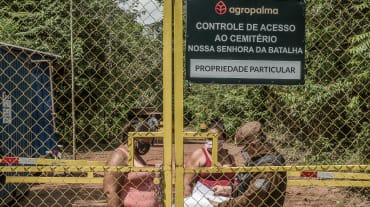
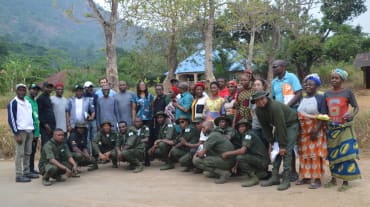
Indigenous communities in the Lacandon Forest in Chiapas are being violently evicted by federal police and army forces , in support of corporate plans for oil palm expansion and other activities, including tourism falsely called eco-tourism. Please write to the authorities in Mexico and in Chiapas state to support local communities’and organisations’ calls for an immediate end to the evictions and the return of evicted comunities to their land, restitution for the damage which has been caused, the prosecution of those responsible and for an end of oil palm monocultures in the area. (Start: 09.03.2010)
US Bill would use trees from National Parks to test dangerous unproven technology
Pinyon-juniper in Arizona – Potential biochar feedstock
A US bill calls for logging so-called ‘excessive biomass’ including in US National Parks and heating them in order to produce fine-grained charcoal to be used in soils, called ‘biochar’. If this bill is approved, it will set a precedent that will make ‘carbon offsets’ from ‘biochar’ more likely. This is likely to seriously damage fragile ecosystems, worsen climate change and lead to yet more tree monocultures (Start: 09.03.2010)
Peru: Palm oil companies destroy the Peruvian Amazon rainforest
Deforestation for palm oil
“The forest is not for sale! The forest will be defended!” Those are the calls from indigenous peoples in Peru defending their territories. Deep inside the Peruvian Amazon forest, in the regions San Martín and Loreto, thousands of hectares of virgin rainforest are being destroyed and converted to oil palm plantations at the hands of the powerful Romero Group (Grupo Romero), supported by the policies of the government of Peru. Without any public consultation, this palm oil company has been awarded concessions over thousands of hectares of rainforest. (Start: 24.02.2010)
Say No to Shell’s Brazilian sugar cane biofuel plans
Sugar cane
Shell is planning to make the largest ever investment in biofuels by joining with Brazilian company Cosan to take a large share of the sugar cane market. Sugar cane production is linked to the destruction of cerrado and forest, including Amazon, and Cosan is embroiled in a debate with the Brazilian government over the use of slave labour. Email Shell asking them to pull out of this proposed venture and to invest in true renewables instead. (Start: 25.02.2010)
A second hydrocarbon boom threatens the Peruvian Amazon
Peruvian Amazon
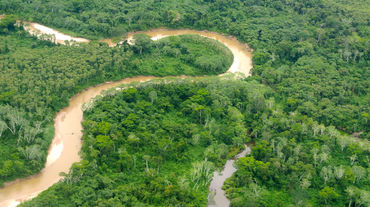
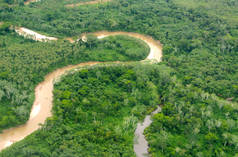
The Peruvian Amazon is home to extraordinary biological and cultural diversity, and vast swaths of this mega-diverse region remain largely intact. Recent analysis indicates, however, that the rapid proliferation of oil and gas exploration zones now threatens the region‘s biodiversity, indigenous peoples, and wilderness areas.
Sierra Leone: European ethanol project to cause more hunger in Sierra Leone
Cars versus people and nature
To meet the growing demand for agrofuels, Addax Bioenergy, a subsidiary of the Swiss-based oil, gas and mining corporation Addax & Onyx Group, is planning to acquire up to 20,000 ha of farmland in north-western Sierra Leone for a sugar cane plantation and an ethanol refinery. Ethanol will be produced exclusively for the European market. Investment deals for a total of £210 million are being considered by six European investment and development funds as well as by the African Development Bank. Please help to say no to this destructive land grab. (Start: 17.02.2010)
When will IKEA see the light? No palm oil for candles and tea lights
Rainforest is being burnt down for oil palm plantations
IKEA’s cheap candles are a consumer attraction. There is, however, a reason for the low price: In order to sell cheap candles and tea lights, IKEA uses palm oil and palm stearin. The company is aware of the negative consequences for the rainforest. Nonetheless, IKEA uses 32,000 tonnes of palm oil for candle wax alone. Please call on IKEA to stop using palm oil for candle wax. (Start: 09.02.2010)
Stop the EU Commission from forcing biodiesel from palm oil on EU countries.
EU Commission: this is not a forest, it’s a plantation
The Commission would like to rename palm oil plantations as “forest” in order that biodiesel from palm oil plantations can still meet EU biofuels sustainability criteria.
Palm oil expansion is a major cause of tropical rainforest destruction and biodiesel from palm oil can easily cause more greenhouse gas emissions that the fossil fuel it is meant to replace.
Help stop the Commission from classifying biodiesel from palm oil as “sustainable” and ask them to ensure that unsustainable palm oil does not count towards our renewable energy obligations. (Start: 05.02.2010)
Bangladesh: Help the Jumma peoples regain control over their forests, lands, and destiny
Forests for the people
Join the signature campaign to encourage the government of Bangladesh to implement the CHT Peace Accord as promised. The goal is to collect 100,000 signatures by March 5th. 2010 (the deadline has been extended!!!), to be submitted to Prime Minister Sheikh Hasina. Please sign the petition below to help the Jumma peoples regain control over their forests, lands, and destiny. (Start: 26.01.2010)
Ecuador’s President threatens to allow Yasuni rainforest to be destroyed by oil companies
In 2007, Ecuador surprised the world with a unique proposal: The government declared that 850 million gallons of heavy oil, found beneath the rainforest, should not be exploited and sold. In exchange, the country requires financial support from the international community. Many governments and organizations around the world have already promised funds. Now, however, President Correa of Ecuador threatens to begin the exploitation of oil fields beneath the Yasuni rainforest (Start: 21.01.2010)
Published on Wednesday, February 10, 2010
Burn Up the Biosphere and Call It Renewable Energy: The New Taxpayer Bailout That Will Make You Sick AND Poor
Scientists Identify Ecuador’s Yasuní National Park as one of the Most Biodiverse Places on Earth
Yasuni
A team of scientists has documented that Yasuní National Park, located in the core of the Ecuadorian Amazon, is the most diverse area in all of South America and shatters world records for a wide array of plant and animal groups, from amphibians to trees to insects.
Protest French Company Shipping Madagascar’s Illegally Logged Rosewood Timbers to China
Madagascar's rainforests are in a state of resource anarchy
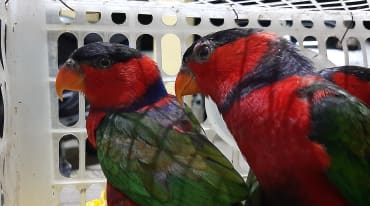
Delmas shipping, a Belgian subsidiary of French shipping giant CMA-CGM, is planning to ship hundreds of containers of illegally logged ancient rainforest logs from Madagascar to China anytime soon. Post-coup illegal log and wildlife trade continue to threaten Madagacar's biodiversity rich rainforest remnants, ecological sustainability and future potential for national advancement. (Start: 20.12.2009)
Action: Multi-million UN carbon credits for agrofuels threaten climate, forests and people
UN promotes destructive Palmoil-plantations
A UN board has decided that soya, palm oil and other agrofuel plantations can now receive carbon credits through the Clean Development Mechanism (CDM). The agrofuel industry, already boosted by EU and US targets, incentives and subsidies, can now look forward to hundreds of millions of extra subsidies. Please sign a letter to protest against this decision, which will cause more climate change, more deforestation, more land-grabbing, more water depletion and environmental contamination and more hunger. (Start: 11.12.2009)
Palm oil is a cheap industrial commodity and is used in food products of every type including margarine, ice cream, biscuits and washing powder. And increasingly it is found in "biodiesel" fuel made from palm oil, to run our cars and for heating stations. In particular, the rainforests are falling victim to rapidly expanding palm oil plantations in Indonesia. The Orangutans are losing their habitat. Activists from the environmental group Centre for Orangutan Protection (COP) in Kalimantan (Borneo) are risking their life to save Orangutans and organize resistance against the destruction of the rainforest by oil palm.
Climate activists blockade biomass plant in Port Talbot
Blockade of biomass plant in Port Talbot
Activists from Climate Camp Cymru [1] have blockaded a biomass plant in Port Talbot to protest against plans to produce electricity from imported woodchips.
Two protestors used bicycle locks to close off the plant’s entrance, stopping the hourly 20-tonne deliveries of woodchip needed to keep the power station operating. A large banner on the gates reads “Biomess”. Other activists climbed up the chimney to unfurl a giant banner in Welsh reading “Clean Energy: Dirty Joke”. More.. http://climatecampcymru.org/?p=932
Give a rainforest-certificate to someone. The Chaco jungle in Paraguay is the habitat of many endangered plants and animals like tapir, puma and giant armadillo. Not only the nature is threatened, but the 2,500 indigineous Ayoreo and 16,000 Enxet also. By buying primeval forest in Chaco, Rainforest Rescue wants to prevent the imminent deforestation and ensure the survival of the indigens.
Please help our project. One square meter Chaco jungle hardly costs more than 1 Cent!
The Roundtable on Sustainable Palm Oil (RSPO) held its Annual General Meeting in Kuala Lumpur, between 2-4th November. Organisations: please, sign on an Open Letter against oil palm expansion and greenwashing. To sign on, send a short email to: unsustainablepalmoil@gmail.com
Protest against irresponsible soy - Vote against climate subsidy for Monsanto
Together with Toxic Soy, we sent 10.500 mails to the Dutch Government. This way we give ‘responsible’ soy the bad name it deserves. The Dutch Ministers Verburg and Koenders replied that they realise the RTRS has a long way to go, but they do see progress and keep supporting it. They don‘t want to accept that growing (GM) crops with massive use of herbicides can never be responsible. Soy export from South-America as animal feed for pigs and poultry in Europe can in itself never be responsible. Real solutions can be found in growing animal feed in Europe, strongy reducing the meat-industry and supporting the affected communities.
New report: Soy and Agribusiness Expansion in Northwest Argentina - Legalized deforestation and community resistance
A new report has been launched titled “Soy and Agribusiness Expansion in Northwest Argentina – Legalized deforestation and community resistance. The cases of the Wichí communities of the Itiyuro River Basin and Misión Chaqueña, the Creole families of the Dorado River Basin and the Guaraní communities of El Talar”. The report is published by CAPOMA (Argentina), La Soja Mata and Chaya Comunicación (Argentina), with the support of: BASE Investigaciones Sociales (Paraguay)